
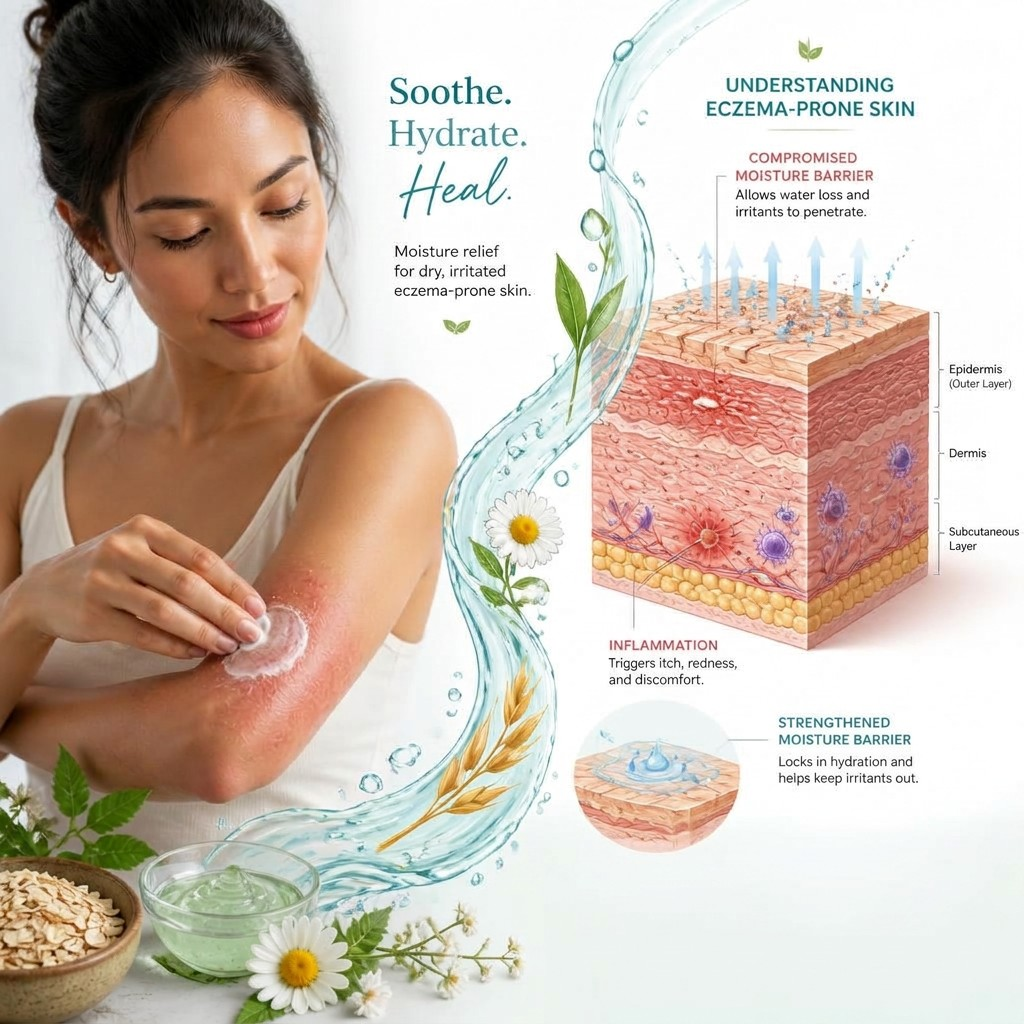
Eczema Awareness Month: Is Your Skin on a Monthly Eczema Flare Subscription?
October is Eczema Awareness Month, the perfect time to talk about eczema flare-ups and what really drives them. It’s a whole month to notice your skin, show it some love, and maybe give it a little extra kindness.
But let’s be honest. If your eczema flares up every single month, you don’t need a special month to be aware of it. You already have your own private awareness month. Twelve of them, actually. It’s like a subscription you never signed up for, and the cancel button is nowhere to be found.
If that sounds familiar, this post is for you. And the good news? You don’t have to keep renewing it.
Your Skin Is the Messenger, Not the Problem
Gentle cleansers and rich moisturizers are wonderful. Please keep using them. They help your skin feel calmer and more comfortable.
But if you’ve tried every cream on the shelf and the flares keep coming back like clockwork, there’s usually a reason. Your skin is often the messenger. It’s telling you something is going on underneath.
At One Living Clinic, we don’t chase symptoms. We pursue answers, with precision. That means looking past the itchy patch and asking a better question: why does this keep happening?
What Causes Eczema Flare-Ups? What the Research Says
Every person is different, but here are some of the common “inside” reasons we look at when skin keeps acting up:
- Your gut. Your gut and your skin talk to each other all day long. Scientists call this the “gut-skin axis.” Research has linked the gut microbiome to when eczema starts, how severe it gets, and even how often it flares (Microbiome in the Gut-Skin Axis in Atopic Dermatitis; Atopic Dermatitis: Beyond the Skin and Into the Gut).
- Food sensitivities. Some foods may quietly stir up inflammation. You might not notice it on your plate, but your skin might notice it two days later.
- Histamine overload. If you also get hives, flushing, a stuffy nose, or itchy eyes, histamine may be part of the story.
- Mold and environmental toxins. Hidden mold at home or at work can keep the immune system on high alert. In one study of water-damaged homes, children exposed to higher indoor mold levels had much higher odds of eczema (Indoor Molds and Dampness and Allergic Diseases).
- Stress and a frazzled nervous system. Ever notice flares show up right before a big deadline? That’s not a coincidence. Research shows stress can weaken the skin barrier and push the immune system toward an allergic response. Stress-reduction techniques have even been shown to improve skin symptoms (Stress and Atopic Dermatitis).
- Missing nutrients. A review of 20 studies found people with eczema tend to have lower vitamin D levels, with the lowest levels in the most severe cases. Vitamin D supplementation helped ease symptoms (Vitamin D and Atopic Dermatitis Meta-analysis). Other nutrients like zinc and healthy fats matter too.
- A sluggish lymphatic system. Your lymphatic system helps clear waste and calm inflammation. When it’s backed up, everything feels heavier, including your skin.
- Hormone shifts. If your flares line up with your cycle, you’re not imagining it. In a survey of 720 women with eczema, flares happened mostly right before and during their periods (Impact of Atopic Dermatitis on Adult Women’s Lives). Researchers think shifting estrogen and progesterone levels affect the skin barrier and immune system (The Menstrual Cycle and the Skin).
How We Help Eczema Heal From the Inside Out
We love a good moisturizer. But we also love finding out why your skin needs so much of it.
Here’s what working with us can look like:
- We listen first. We want your whole story: when the flares started, what makes them better or worse, and what you’ve already tried.
- We test, not guess. Depending on your needs, we may look at things like gut health, food sensitivities, nutrient levels, hormones, and toxin or mold exposure.
- We build a plan just for you. No cookie-cutter protocols. Your plan may include nutrition changes, customized IVs, targeted supplements, gut support, and help calming your nervous system.
- We support your body’s natural detox. Services like FlowPresso and our One Day Reset help get your lymphatic system moving so your body can clear what it doesn’t need.
- We stay with you. Healing skin from the inside takes time. We check in, adjust, and cheer you on along the way.
- We help your skin bounce back. Once your skin is calm, our Osmosis Infusions with the RevitaPen can help it look and feel healthy again. This gentle, needle-free facial helps nourishing ingredients soak in deeper, with no peeling or downtime. Think of it as the outside support that pairs with all the inside work. (We’ll always check that your skin is ready first, since we never treat an active flare.)
A Few Gentle Things You Can Try Today
While you’re figuring out the bigger picture, these small habits can help your skin feel a little happier:
- Keep showers warm, not hot. We know a hot shower feels amazing. Your skin disagrees.
- Moisturize right after bathing. Pat dry and seal in moisture while skin is still a little damp.
- Drink your water. Hydrated skin starts on the inside.
- Keep a flare diary. Jot down foods, stress, sleep, and your cycle. Patterns often pop out faster than you’d think.
- Choose soft, breathable fabrics. Cotton is your friend. Scratchy wool, not so much.
- Give your nervous system a break. A few slow, deep breaths, a short walk, or an early bedtime can do more than you’d expect.
These tips help with comfort. If flares keep coming back, that’s your sign to dig deeper.
Ready to Cancel That Monthly Subscription?
This Eczema Awareness Month, we’d love to help you trade “here we go again” for real answers.
You don’t have to keep living from flare to flare. You don’t have to keep buying cream after cream and hoping this one works. And you definitely don’t have to figure it all out alone.
Come see us. We’ll look at the whole you, find what’s really going on, and build a plan that helps your skin heal from the inside out.
Radiance, vitality, and answers, all in one place.
Book your visit with One Living Clinic today. Your skin has been trying to tell you something. Let’s listen together.
Quick Questions
Why does my eczema keep coming back even when I do everything right? Creams calm the surface, but they can’t fix what’s happening underneath. Things like gut health, food triggers, stress, and toxins can keep restarting the cycle.
Can stress really cause a flare? Yes. Stress can ramp up inflammation and make skin more reactive. That’s why calming the nervous system is part of how we care for skin.
How long does it take to see a change? Everyone is different. Many people notice small improvements within a few weeks, with bigger changes over a few months as the body heals.
Do I have to stop seeing my regular doctor? Not at all. Our care can work right alongside the care you already have.
Is this only for eczema? Nope. If you deal with psoriasis, hives, rosacea, or other stubborn skin issues, the same inside-out approach can help.
This article is for education only and is not medical advice. Please talk with a qualified healthcare provider about your own health. If your skin is very painful, swollen, oozing, or shows signs of infection, see a provider right away.
References
- Lee SY, et al. Microbiome in the Gut-Skin Axis in Atopic Dermatitis. Allergy, Asthma & Immunology Research.
- Atopic Dermatitis: Beyond the Skin and Into the Gut. Journal of Clinical Medicine.
- Association of exposure to indoor molds and dampness with allergic diseases at water-damaged dwellings in Korea. Scientific Reports.
- Stress and atopic dermatitis. Current Allergy and Asthma Reports.
- Effect of Vitamin D Serum Levels and Supplementation on Atopic Dermatitis: A Systematic Review and Meta-analysis. American Journal of Clinical Dermatology.
- Fougerousse AC, et al. Impact of Atopic Dermatitis on Adult Women’s Lives: A Survey of 1,009 French Women. Acta Dermato-Venereologica.
- The menstrual cycle and the skin. Clinical and Experimental Dermatology.